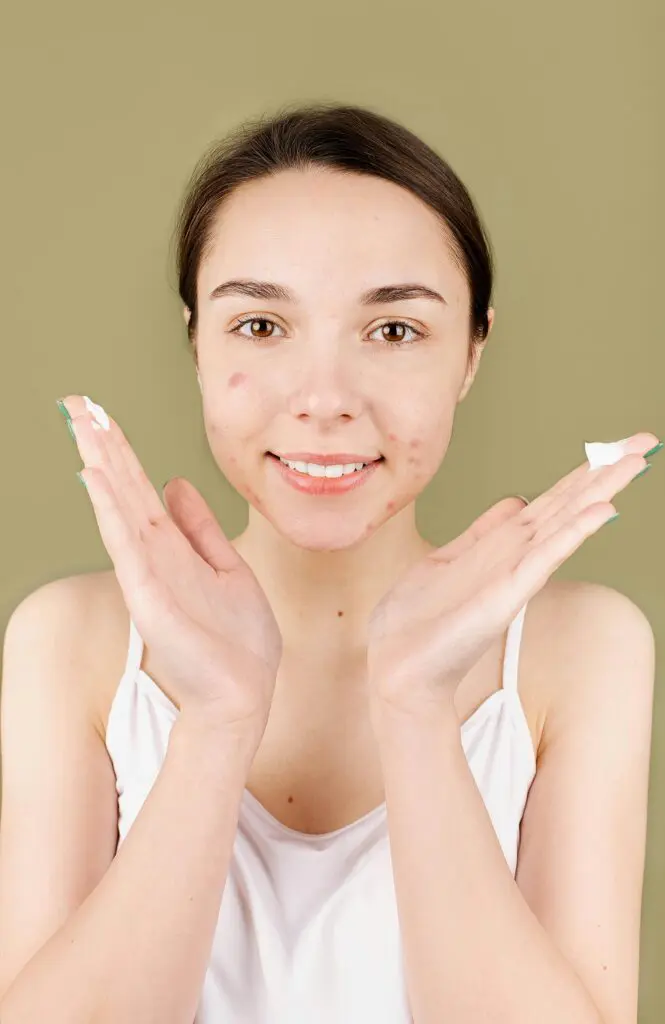
Getting teenage acne in your 20s and 30s?
Do you still get acne in your 20s or 30s?
It’s frustrating when for most people that ends once the teenage years are over, but for some people the problem continues.
Read on to discover some of the factors that might be behind the acne and what you can do about them.
- Hormone imbalances
In the teenage years, the hormone fluctuations of puberty and lead to some hormones getting out balance and this driving acne. The androgen hormones are often the key players here. As you move out of puberty, if there are still some hormones out of balance, this can show on the skin as acne. A good clue to whether your acne has a hormone element to it, is whether it is worse at certain times of your cycle. Hormonal related acne is often found more on the chin and jawline.
2. Gut health
There is a connection between gut health and skin health. Not just with acne, but also other skin conditions like psoriasis and eczema. Working on gut health and promoting good gut bacteria can help to calm the skin down.
3. Inflammation
The redness and tenderness that comes with acne shows that there is some inflammation in the skin. Getting in more anti-inflammatory foods to help calm down inflammation levels can soothe acne.
4. Hormones in food
There is a hormone in foods like red meat and dairy than can encourage acne, so it can be worth reducing these foods and seeing if it makes a difference to your skin.
5. Sugar in the diet
Too much sugar in the diet can feed the poor gut health, increase inflammation and add to hormonal imbalances – all making acne worse.
6. Stress
Stress can increase inflammation, worsen hormonal imbalances and add to poor gut health so also making some of the risk factors for acne worse. In addition, stress can break down the protective skin barrier, making you more prone to acne.
It’s rarely one thing driving the acne, and so we need to come at it from a number of different angles, working on stress, balancing hormones, improving gut health, reducing inflammation and taking out any particular food triggers. We can do this with a combination of diet, lifestyle changes and supplements.
If you’d like some one to one support with reducing acne, book in for a free chat to find out how nutritional therapy can help.
Content Disclaimer
The information contained above is provided for information purposes only. The contents of this blog are not intended to amount to advice and you should not rely on any of the contents of this blog. Professional advice should be obtained before taking or refraining from taking any action as a result of the contents of this blog. Emma Belton Nutrition disclaims all liability and responsibility arising from any reliance placed on any of the contents of this blog.